
My Journey into Local SEO: From Frustration to Success in San Diego
Just a few months ago, I found myself struggling to get my small business noticed in San Diego’s bustling local scene. Despite offering top-notch services, my Google Business Profile seemed invisible in the local pack, leaving me puzzled and eager to learn more. That frustration turned into motivation when I started exploring proven strategies to enhance my local SEO efforts, and I want to share some of those insights with you today.
Understanding the Power of the Google Local Pack in San Diego
The local pack is a crucial element for local businesses in San Diego, especially with the increasing importance of maps SEO in California. It’s what customers see when they search for services nearby, and securing a spot there can significantly boost your visibility and foot traffic. My experience taught me that appearing in the local pack isn’t just about luck; it’s about strategic optimization and understanding what Google values most.
Key Strategies That Made a Real Difference
One of the first steps I took was optimizing my Google Business Profile comprehensively. I used detailed descriptions, added high-quality photos, and kept my information consistent across all platforms. I also focused on gathering genuine reviews from satisfied customers, which I learned is vital for building authority and trustworthiness. For a step-by-step approach, I highly recommend checking out this detailed guide.
How Can Local Pack Optimization Improve Your Business?
Optimizing your local SEO isn’t just about rankings; it’s about creating a trustworthy presence that customers can rely on. I found that paying attention to local keywords, such as “best coffee shop in San Diego,” and embedding them naturally into my content helped attract more local searches. Plus, ensuring my NAP (Name, Address, Phone Number) information was consistent across directories reinforced my local authority. The impact was tangible — more calls, visits, and positive reviews.
What are the common pitfalls to avoid when trying to rank in the local pack?
From my experience, one mistake is neglecting the importance of local reviews or failing to update your profile regularly. Google favors active and engaged profiles, so staying responsive and maintaining your information is crucial. Also, ignoring local keywords can be a missed opportunity — I learned that integrating them naturally into my website content and Google My Business posts made a big difference.
If you’re serious about dominating your local market, I suggest exploring more advanced tactics like local link building and schema markup. For a comprehensive guide, visit this resource.
And if you want to share your own experiences or ask questions, please drop a comment below! I believe that learning from each other’s journeys is the best way to succeed in local SEO.
Leveraging Local Schema Markup to Boost Your San Diego Business Visibility
One of the most underutilized yet powerful tactics in local SEO is implementing schema markup. This code helps search engines better understand your business details, enhancing your chances of appearing in rich snippets within the local pack. For San Diego businesses aiming for top-tier visibility, incorporating local schema markup can be a game-changer. It’s especially effective when paired with consistent NAP data and optimized Google My Business profiles. To explore comprehensive schema strategies, check out this expert guide.
Could Voice Search Optimization Be the Next Frontier for San Diego Local SEO?
As voice search continues to grow exponentially, optimizing for conversational keywords and question-based queries becomes essential. Think about how customers might verbally ask, “Where’s the best pizza near me in San Diego?” or “What are top-rated salons in La Jolla?” Focusing on natural language and long-tail keywords in your content and Google My Business posts can position your business to capture voice-driven local searches. According to Search Engine Journal, voice search optimization is critical for local businesses seeking to stay ahead in a competitive market (source). Implementing FAQ sections and updating your profile with keyword-rich descriptions further enhances your chances of being voice-search friendly.
Optimized Google My Business profile on a mobile device showing local search results in San Diego.
How Can You Sustain and Measure Your Local SEO Success Over Time?
Consistency is key in maintaining high rankings. Regularly updating your Google Business Profile, responding to reviews, and monitoring local keyword performance are vital for ongoing success. Using analytics tools like Google Insights and third-party SEO platforms can help you track changes in your local pack visibility and refine your strategies accordingly. Engaging with local community events and earning backlinks from reputable San Diego sources also support sustained growth. For more advanced tactics, consider exploring these expert tips to keep your business at the forefront of local search results.
Embracing the Complexity: Personal Lessons in Mastering Local SEO
Reflecting on my journey, I realize that the path to local SEO mastery, especially within a vibrant market like San Diego, is far from linear. It’s akin to navigating a dynamic ecosystem where algorithms evolve, consumer behaviors shift, and local nuances demand tailored strategies. Over time, I’ve learned that understanding these subtle shifts is crucial. For example, dedicating time to analyze local competitors’ profiles revealed patterns that Google favors, such as consistency in NAP data and the strategic use of localized content. These insights weren’t immediately obvious but became clear through persistent experimentation and attentive observation.
The Art and Science of Advanced Local SEO Tactics
Beyond foundational optimization, I dove into sophisticated techniques like leveraging schema markup and harnessing the power of local backlinks. Schema markup, in particular, requires a nuanced approach—it’s not just about adding code but understanding how Google interprets these signals to enhance rich snippets. I found that aligning schema for events, offers, and local business details significantly improved visibility in competitive niches. Moreover, building relationships with local influencers and media outlets created valuable backlink opportunities, elevating my profile’s authority in San Diego’s crowded market.
How Do I Balance Technical SEO with Local Engagement?
This question was a personal challenge. While technical optimization is essential, genuine community engagement and customer interaction often yield more sustainable results. I started participating in local events and encouraging satisfied customers to share their experiences online. Responding promptly to reviews and engaging with community forums fostered trust and built a loyal customer base. According to Moz’s Local Search ranking factors, reviews and community signals are increasingly critical, emphasizing the importance of balancing technical and relational strategies.
For those looking to deepen their knowledge, exploring expert tips can provide actionable insights. I also recommend a continuous loop of learning—testing new tactics, analyzing results, and refining your approach based on local feedback and analytics.
The Power of Authenticity in Local Profile Optimization
One recurring theme in my experience is the importance of authenticity. Google’s algorithms are increasingly adept at detecting genuine engagement versus manipulative tactics. I’ve found that sharing real stories, updated local content, and transparent interactions resonate more with both search engines and customers. For example, updating my Google My Business posts with behind-the-scenes stories or upcoming local events helped differentiate my profile from competitors who relied solely on generic descriptions.
Furthermore, incorporating user-generated content, such as customer photos and reviews, adds a layer of authenticity that algorithms and local consumers alike value. This approach not only boosts rankings but also creates a more relatable and trustworthy brand image. If you’re interested in exploring how to authentically enhance your profile, I encourage you to share your own experiences or ask questions in the comments—I believe that collective learning accelerates everyone’s success.
Future-Proofing Your Local SEO Strategy in San Diego
The landscape of local SEO is continuously evolving. As voice search and AI-driven personalization become more prevalent, staying ahead requires a proactive mindset. I’ve begun experimenting with conversational keywords and FAQ sections tailored for voice queries, recognizing that these elements will become even more critical. According to Search Engine Journal, optimizing for voice search involves more than keywords—it’s about understanding user intent and providing clear, concise answers.
To future-proof your efforts, consider integrating these advanced tactics into your ongoing strategy, tracking performance meticulously, and remaining adaptable to algorithm updates. Remember, local SEO isn’t a set-it-and-forget-it task; it’s an ongoing conversation with your community and search engines alike.
Harnessing Data-Driven Insights for Continuous Local SEO Improvement
As I delved deeper into San Diego’s competitive local market, I realized that mere implementation of best practices isn’t enough; ongoing data analysis becomes the backbone of sustained success. Leveraging tools like Google Insights and third-party SEO analytics platforms enables me to identify subtle shifts in local search behavior, trending keywords, and competitor movements. For example, tracking the performance of specific local keywords over time revealed opportunities to optimize further or pivot strategies to address emerging consumer interests. This iterative approach ensures that my local SEO efforts remain agile and aligned with market dynamics, turning raw data into actionable insights that keep my business ahead of the curve.
Integrating Hyper-Localized Content to Cement Your Presence
One strategy I found particularly effective was creating hyper-localized content—stories, guides, and updates that resonate with the San Diego community’s unique culture and interests. By showcasing involvement in local events, highlighting community partnerships, or sharing customer success stories specific to neighborhoods like La Jolla or North Park, I fostered a sense of authenticity and community trust. This approach not only improved my rankings in local search results but also cultivated genuine engagement, translating into loyal customers. Incorporating localized keywords seamlessly into this content further amplified its impact, reinforcing my authority and relevance within the local ecosystem. For detailed tactics, exploring this comprehensive guide proved invaluable.
What Are the Ethical and Technical Boundaries in Advanced Local SEO Tactics?
One of the most nuanced questions I faced was balancing aggressive SEO tactics with ethical considerations. For instance, while local backlinks and schema markup can significantly boost visibility, over-optimization or manipulative practices risk penalties and damage to reputation. I learned that transparency, authenticity, and adherence to Google’s guidelines are paramount. Incorporating schema markup for local events or offers, as recommended by this expert resource, requires a nuanced understanding of structured data principles. It’s essential to ensure that all enhancements genuinely reflect your business and community presence, avoiding shortcuts that could lead to algorithmic penalties. Engaging in continuous education and community forums helps me stay updated on evolving best practices and maintain a sustainable, ethical SEO strategy.
How Can I Leverage Community Engagement and Technical Optimization to Maximize Impact?
Combining community outreach with technical excellence creates a formidable synergy. Participating in local events, sponsoring neighborhood initiatives, and encouraging satisfied customers to share their experiences online build social proof and trust. Simultaneously, refining technical elements like site speed, mobile responsiveness, and structured data ensures that search engines and users experience seamless interactions. This dual focus fosters a resilient local SEO presence that’s both visible and trusted. If you’re eager to explore these multidimensional tactics and share your own experiences, I invite you to connect through this contact page. Your insights could inspire new strategies that benefit our entire community.
The Future of Local SEO in San Diego: Embracing AI and Personalization
Looking ahead, the integration of artificial intelligence and personalized search experiences promises to revolutionize local SEO. Algorithms are becoming more adept at understanding user intent, context, and preferences, making tailored content and local voice search optimization more critical than ever. For example, optimizing FAQ sections for natural language queries or leveraging AI-driven content tools can significantly enhance relevance and engagement. As Search Engine Journal highlights, staying ahead involves embracing these technological advancements and continuously refining your strategies to match evolving user behaviors. I’ve started experimenting with AI tools to generate hyper-relevant content and improve my local profile’s responsiveness, positioning my business as a forward-thinking leader in San Diego’s vibrant local scene.
< >
>
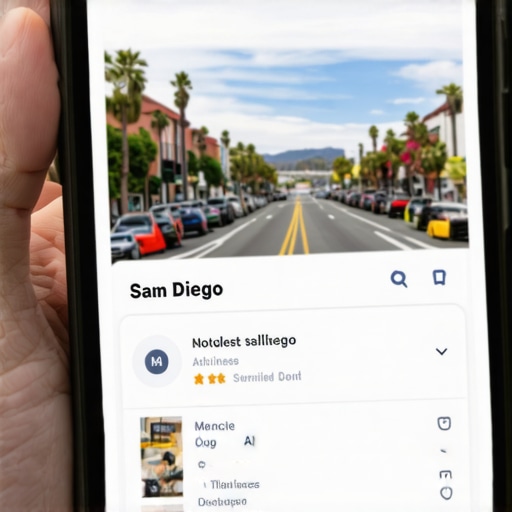
Close-up of a mobile device displaying personalized local search results for San Diego businesses, illustrating AI-driven search personalization.
Things I Wish I Knew Earlier (or You Might Find Surprising)
1. The Power of Authentic Engagement
In my early days, I underestimated how genuine interactions with customers and the community could significantly impact my local SEO. Building real relationships and encouraging authentic reviews created a ripple effect, boosting my visibility more than just technical tweaks ever did.
2. Consistency Is More Critical Than Perfection
Initially, I obsessed over perfect profile details. Later, I realized that regular updates, responding to reviews, and maintaining active profiles consistently trumped sporadic perfection. It’s about staying present and engaged in your local community.
3. Local Content Is Your Secret Weapon
Creating hyper-localized content that resonates with San Diego’s neighborhoods helped me connect on a personal level. Sharing stories about local events or customer successes made my profile more relatable and trustworthy, which Google loves.
4. Don’t Overlook Schema Markup
Implementing local schema markup seemed daunting at first, but it paid off. It helps search engines understand your business better, leading to richer snippets and higher click-through rates. It’s a game-changer if done thoughtfully.
5. Voice Search Is More Than a Buzzword
Optimizing for voice search with conversational keywords and FAQs opened new avenues for local discovery. Customers in San Diego are increasingly asking voice assistants for local recommendations, and being prepared can give you a competitive edge.
Resources I’ve Come to Trust Over Time
- Backlinko: Brian Dean’s site is my go-to for practical SEO tactics that are easy to implement and proven effective. I’ve learned a lot from his case studies and step-by-step guides.
- Google’s Official Business Blog: Staying updated with Google’s own announcements and best practices keeps my strategies aligned with the latest algorithm changes.
- Search Engine Journal: For the latest trends, especially in voice search and AI, SEJ offers in-depth articles that help me adapt my approach.
- Moz Local: Their insights on local SEO and reputation management have been invaluable for maintaining a healthy local profile.
Parting Thoughts from My Perspective
Mastering local SEO in San Diego has been a rewarding journey of continuous learning and adaptation. The key takeaway is that genuine engagement, consistent effort, and leveraging the right tools make all the difference. If you’re looking to elevate your local presence, start small, stay consistent, and always prioritize authentic interactions. Remember, local SEO isn’t just about rankings; it’s about building trust and community presence. If this resonated with you, I’d love to hear your thoughts. Feel free to share your experiences or ask questions in the comments or check out this guide for deeper insights. Let’s grow together in San Diego’s vibrant local scene!
Reading about the journey into local SEO success in San Diego really resonated with me. I’ve also faced that uphill battle of trying to get my small business noticed amidst fierce local competition. Implementing detailed profile optimizations and maintaining consistent NAP details helped me some, but I’ve found that engaging authentically with the community makes a tangible difference. I’ve started participating more in local events and encouraging customers to leave reviews, which seems to boost trust and visibility over time. My experience aligns with the idea that authentic interactions and regular updates are key; otherwise, profiles can become stale, and Google might overlook them. For anyone struggling with visibility, have you experimented with hyper-localized content or community involvement? I’d love to hear what’s worked best for others, especially in vibrant markets like San Diego. Sometimes, it feels like building real relationships can be even more effective than just technical SEO efforts.
This story really resonates with my own experience in San Diego. I started out with the same frustration of trying to get my local business noticed through standard SEO tactics, but I found that genuine community engagement really elevated my profile. Participating in local events and encouraging satisfied customers to share their experiences online not only built trust but also helped boost my reviews, which I know Google values highly. The point about consistency being more important than perfection really hits home for me — keeping profiles active and up-to-date is essential. I’ve also been exploring hyper-localized content, like neighborhood-specific blogs and social media posts, to deepen my connection with local customers. How do others here balance technical SEO efforts with authentic community involvement? Do you find one more effective than the other, or is it best to do both simultaneously? I’d love to hear your thoughts on integrating these strategies effectively in a busy local market like San Diego.
I really appreciated your insights on balancing community engagement with technical SEO. From my own experience running a local shop here in San Diego, I’ve found that authentic interactions—like attending neighborhood events or directly engaging with customers online—can create a loyal customer base that even surpasses what SEO alone can achieve. However, I’ve also realized that technical strategies like schema markup and consistent NAP data are essential for visibility. The challenge I face is finding enough time to effectively do both without spreading myself too thin. How do others here prioritize or integrate these efforts? Do you see a significant difference in long-term results when focusing more on one over the other? I believe combining both can be powerful, but I’d love to hear real examples of how others manage that balance effectively.
Reading about your journey into local SEO in San Diego really struck a chord with me. I’ve been in the local business scene here for a few years, and I agree that authentic engagement can sometimes make a bigger impact than just optimizing your profile technically. For example, I started participating in neighborhood events and sharing behind-the-scenes stories, which seemed to foster real trust among my local customers. It’s interesting how Google seems to reward those genuine interactions with better visibility over time. I wonder, how do others measure the ROI of community involvement versus technical tactics like schema markup or local backlinks? Do you think one has a more sustained effect than the other, or is a combination always best? I’d love to hear your experiences, especially from those who’ve tried balancing both approaches. Building a strong local presence really is a thoughtful mix of personal touch and technical strategy, isn’t it?